LegioSoft product

Guardhouseauthenticationunder your brand

Guardhouse is LegioSoft's own white-label authentication and authorisation platform. We design, build and run it: hosted sign-in on the customer's domain, roles and permissions, real-time token revocation, machine identity for services and AI agents, and SDKs for common stacks.
  • Identity and access
  • White-label authentication
  • SaaS platform
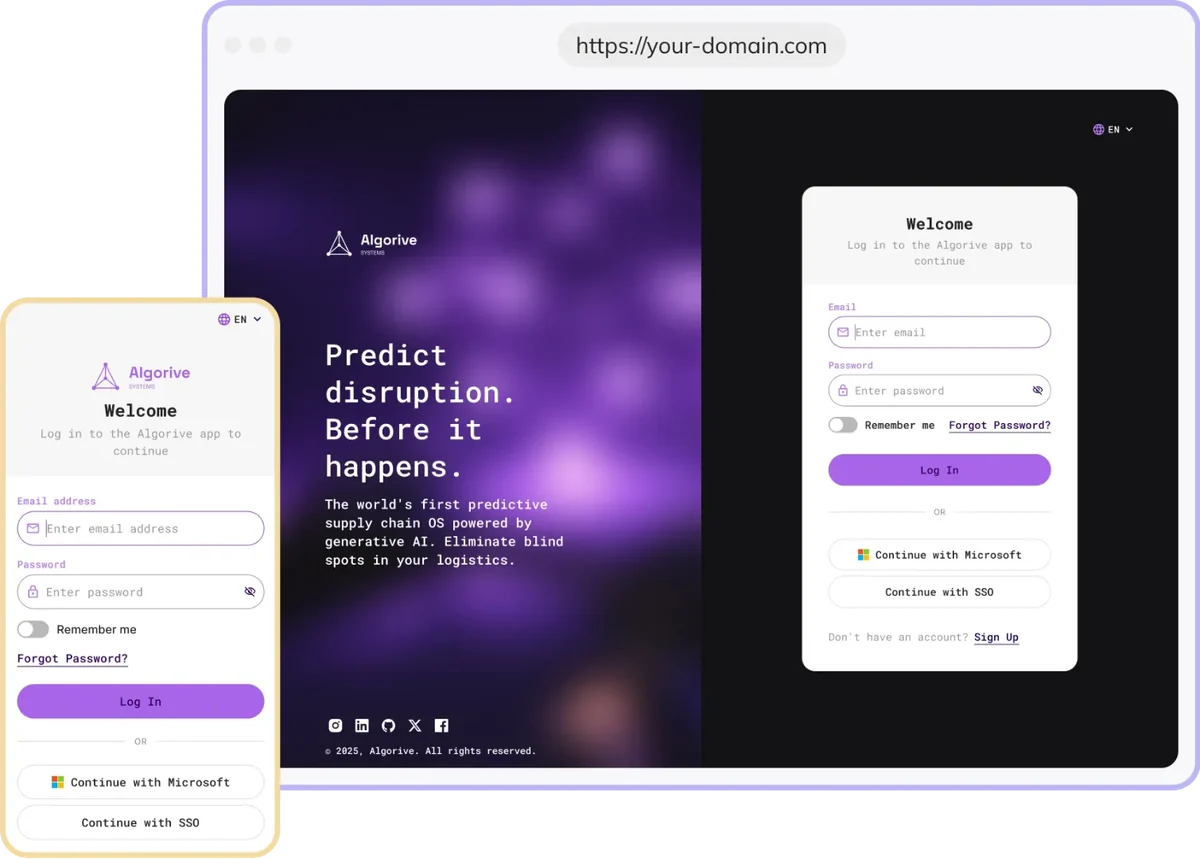
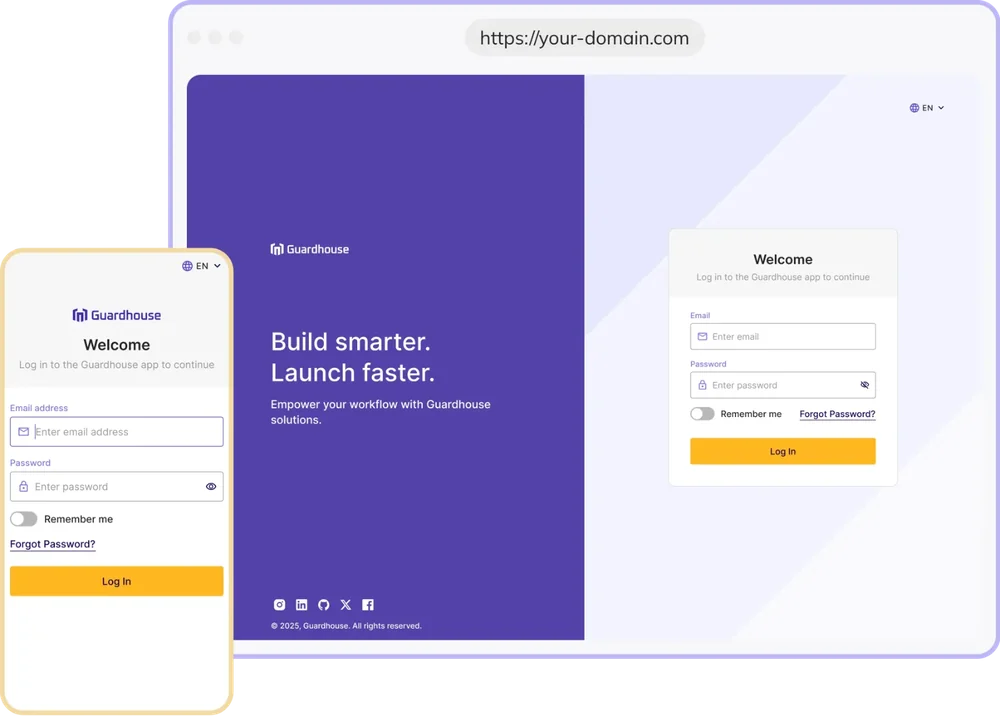
Guardhouse sign-in page on a custom domain, on desktop and mobile

Projectfacts

A LegioSoft product, not a client project. We build, host and support Guardhouse, and our own internal services sign in through it.

guardhouse.cloud
Client
LegioSoft, own product
Location
Spain
Industry
Identity and access management
Project
SaaS platform and SDKs
Technology
  • OAuth 2.0
  • OpenID Connect
  • .NET
  • React
  • React Native
  • Node.js
  • Python
Why we built it

Sign-in is more than a login form

Every product needs sign-up, recovery, MFA, roles and token handling, and each of those needs ongoing security work. Building them again for every project costs time. Guardhouse keeps them in one hosted service that teams configure and connect under their own brand.

White label

Customers see your brand

Guardhouse hosts the sign-up, sign-in, recovery and profile pages, but they carry the customer's logo, theme and domain. End users never see the Guardhouse name. The same pages work on web, mobile and desktop.

Sign-in page branded for a sample company, on desktop and mobile
Sign-in methods

Every sign-in option on one page

Email and password, single-use magic links, TOTP MFA and passkeys are built in, along with four social sign-in providers. Business plans add SSO connectors and organisations. Enterprise adds AD and federation login and SCIM directory sync.

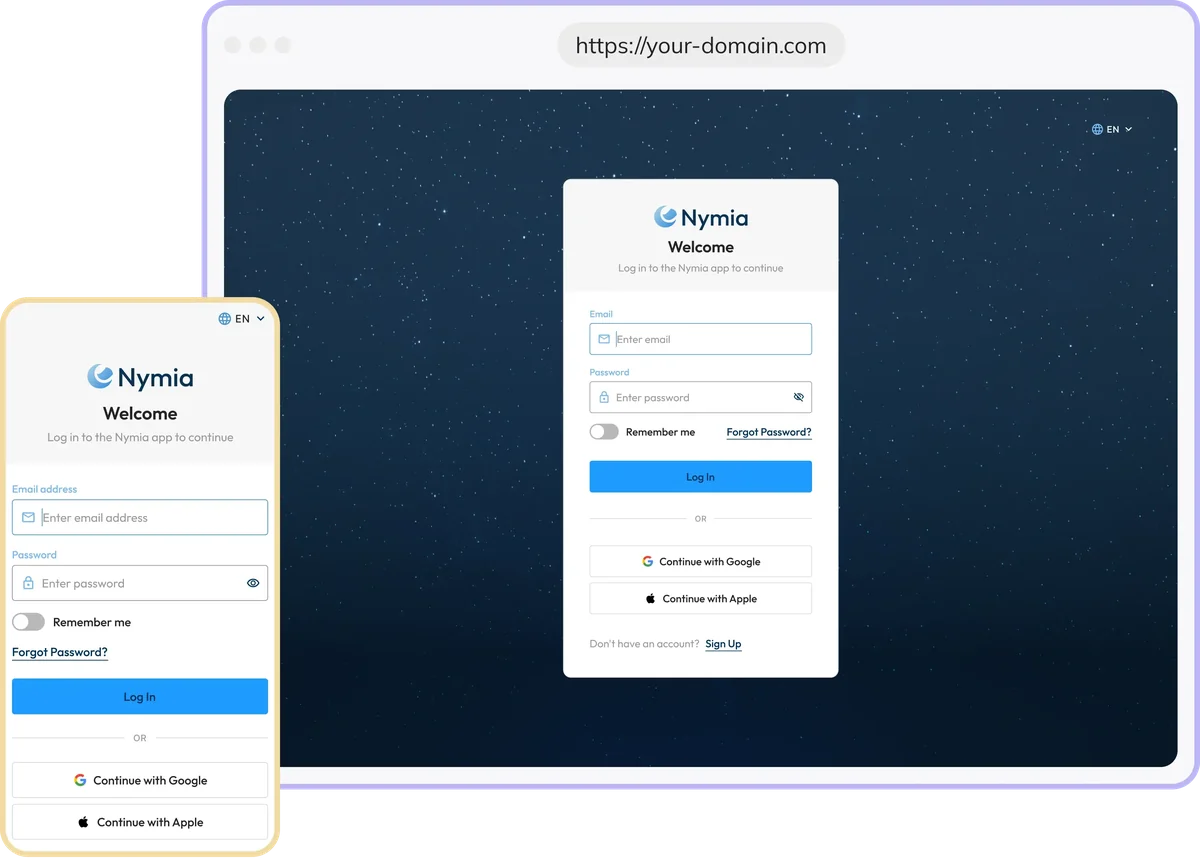
Branded sign-in page with Microsoft and SSO options, on desktop and mobile
Access control

Revoked access ends at the next check

Roles and permissions live in one model and reach APIs as scopes and claims. When an admin blocks a user or revokes a session, APIs that use token introspection reject the token on their next check. Locally validated JWTs stay valid until they expire.

How it fits together

From a service to a scoped token

Backend services, AI agents and MCP servers get the same OAuth access as other APIs, without shared API keys.

  1. Register

    Add the API or MCP server as a resource with its scopes.

  2. Create

    Give each service or agent its own client.

  3. Request

    The client gets a short-lived token through Client Credentials.

  4. Validate

    The API checks the JWT locally or through introspection.

  5. Revoke

    Revoked access is refused at the next introspection.

Our part

What LegioSoft built

We design, build and operate Guardhouse: the hosted identity pages, the OAuth and OpenID Connect server, the admin console and Management API, SDKs for .NET, React, React Native, Node.js and Python, and Guardhouse Cloud in EU (Madrid) and US (Chicago) regions. Enterprise customers can run it themselves or have LegioSoft operate it.

  • White-label sign-in on your domain
  • Roles, permissions and audit logs
  • Token introspection and revocation
  • Machine identity for AI agents and MCP
  • SDKs for .NET, React, Node.js and Python
  • Cloud regions in the EU and US
Built with
  • OAuth 2.0
  • OpenID Connect
  • .NET
  • React
  • React Native
  • Node.js
  • Python

Discuss your project

Tell us what you want to build or improve, which software you use today and any deadline. A few sentences are enough.

Please enter your name.
Please enter a valid email address.
Please describe your project in a few sentences.
  1. We’ll review your message and contact you to discuss the requirements.

  2. Once the scope is clear, we’ll propose an approach and prepare an estimate.

  3. [email protected]